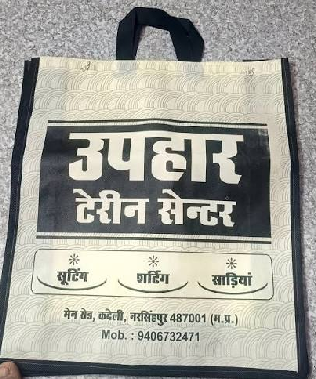
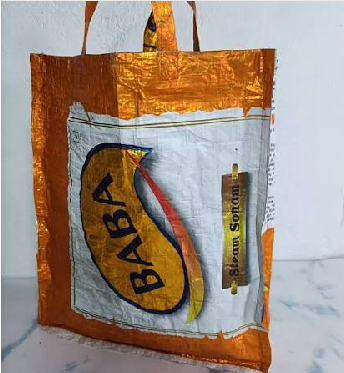
While I was having my evening cup of tea, my mother reminisced about her late father. How he always used to carry his jute bag whenever he went to his shop and while coming back as well, how it became an integral part of his identity in our image of him, how it contained the essentials and the pouch, which again treasured the keys to his shop, which ultimately was the cornerstone of his heart. It begged me to ponder my observations of all the times I have noticed the bag being used by the different, beautiful people around me, who have inherently been part of the surroundings that have shaped me without my acknowledgement.
I see the bag when I accompany my father to buy groceries with him, and with the vendor as well, whose eyes I can see are tired of the struggle to survive for just another day, and whose grief I cannot ever fathom to comprehend. I see the bag with the penurious, whose entire worth as a human is encompassed and strangulated in it. I see the bag with the children sprinting towards the right for their education, which contains their only hope for a life of honour and dignity, while their parents grind their dignity for the sole purpose of existence. I see the bag with the distraught farmer and his daughter, drowning in debt, who have migrated with hunger to feed themselves and their families.
And so, it isn’t just a ‘bag’ in my eyes, but rather a symbol of the trivial, disregarded lives of the common who, despite it all, refuse to be suppressed and defined by the circumstances set on them. It is a subtle defiance against the hierarchy that is fixated and dependent on their exploitation. Therefore, it will always serve as a reminder for me, whenever and wherever I see it, to stay true towards what it represents.