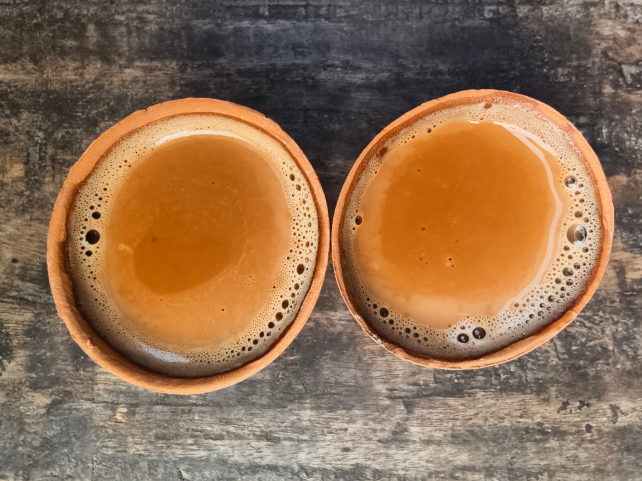
“चाय is an emotion”, my brother always says, blissfully sipping tea from his cup, eyes closed while smelling the richness of its aroma, completely immersed in the tranquillity it offers after a day’s worth of work. I agree very much! What is all the commotion and troubles in one’s life worth, if not being able to have chaai with a loved one or a stranger you met on the street at the end of the day?
Yet, I was keen to understand its imprint on Indian history. So, I dug up and found out how it has always been a symbol of power, transitioning from the hands of the imperialist elites to the hands of the common and needy:
When the British East India Company aggressively developed the native assamica tea plant in the 1830s to combat the Chinese monopoly on tea, they enacted the draconian indentured labour system, displacing the marginalised Adivasi and lower-caste workers from central India to Assam under brutal conditions, as slaves to their humongous tea empires. And so, it became an opulence for the rich, soaked in the blood of the workers, as in any case of oppression throughout history.
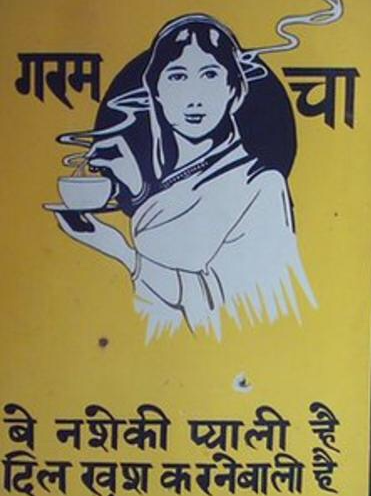
In the early 1900s, in their greed for exploitation, the Indian Tea Association (a puppet of the British) launched a marketing campaign to create a domestic market for lower-grade tea leaves. So, they set up tea stalls at railway stations and textile mills to ‘culturally educate’ workers on what (cheap) tea is. Thus, the “Masala Chaai” was born. Because milk was cheaper at the time (as opposed to the current scenario) than tea leaves, the vendors used much more milk and added numerous spices as well to enhance its flavour, which was in direct contrast to how the colonisers wanted it to be made, plain and rigid.
It crashed the profit margins of the powerful and disrupted the design in the most subtle, unexpected ways! It became the direct opposite of what it meant to the colonisers, who hogged all they could with their power and might, and embellished everything they had with maximalism. In this case, the “Masala Chaai” became a symbol of the ‘maximalism’ they were obsessed with, in the hands of the workers, ousting them of the one thing they had absolute power over. Their fear of empty space (‘Horror Vacui’) was materialising right in front of them, joining hands with the commoners, striking right into their eyes.
From the ‘Boston Tea Party’ to the birth of ‘Masala Chaai’, tea has always been the piston for revolutions. This made me realise how a simple “Masala Chaai” became an inseparable part of our culture. Even today, it is the one beverage that has the power to break the shackles imposed by caste, creed, religion, politics, and ethnicity. It is the one beverage, as I have seen, which, from the richest to the poorest, even if it stretches them thin, and is sometimes the only food they have for the whole day, yet they offer, when showing hospitality. It remains a testament to how the textbooks of hierarchy and power were, and always will be, contested.